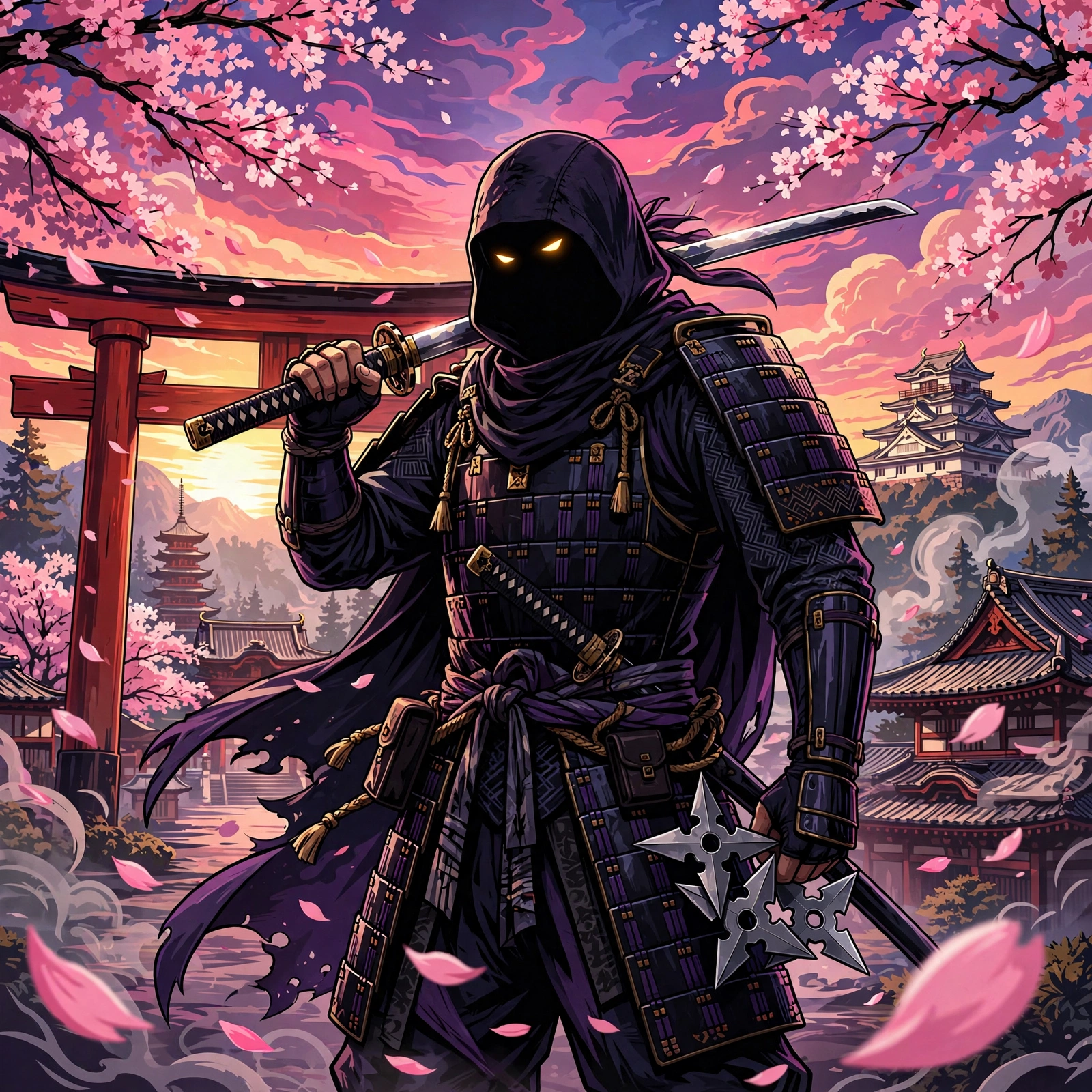
Some artists chase the spotlight. DIGINJA — "the digital ninja" — moves through it unseen. No face, no interviews, no noise: just ink-black beats, neon skylines, and the hum of a city that never sleeps.
The concept is Japan-first by design: a digital ninja moving between Tokyo and the Florida coast, built to resonate in Japan before it echoes back to the States. The art says the rest — flowing ink smoke, a katana's glint, cherry blossoms drifting through the dark.
"The night is the venue. The beat is the mask."
Then came "Neon Ronin" (ネオン浪人) — the flagship, and a gift song for the people of Japan. Built on the hirajoshi pentatonic scale, it weaves koto plucks, taiko drums, and a breathy shakuhachi-style lead through an East Coast 808 groove — then goes full video game: a Famicom-style chiptune lead, ninja-dash arpeggios, and a stealth-mission bridge that detonates into the final hook. Tokyo and the coast in one track.
The sound is pure East Coast after dark — cinematic hip-hop instrumentals for night drives down neon-soaked boulevards, countdown clocks, and the long wait for whatever comes next. "Leonida Nights" (106 BPM, C minor) is the glide — golden-hour menace over a rolling low end. "Leonida After Dark" (93 BPM, A minor) is its moodier twin, built for the hours after midnight.
Every DIGINJA track is composed and produced in-house from the ground up. No samples, no loop libraries, no borrowed anything — fully owned masters, built for radio, sync, film, and the long game. Pronounced dee-ghin-ja (ディギンジャ).